
Deep diveLake levels · Utah
Rising water on Lake Powell: up 20 ft since last month
Rising water on Lake Powell means new cover for fish and floating debris for boaters. The numbers, and how to fish it.
Lake Powell reads 3,538.8 ft on the gauge. That is 20 ft higher than 30 days ago, with 6.4 ft of that in the past week. For this time of year that is 43 ft below normal, so the rise is refilling a lake that was low.
On Lake Powell, a rising level decides which coves fill with fresh cover and which docks end up awash.
A month of water level
Each point on the chart is one day's reading. The dashed line is the usual level for the season.
20 ft in a month moves the water's edge a long way on flat banks.
For reference, the range we have on record runs from 3,516.6 to 3,635.8 ft.
Lake Powell spreads over about 161,000 acres and roughly 1,900 miles of shoreline at full pool. It runs around 580 ft at its deepest. Striped bass, smallmouth bass and largemouth bass are what most anglers on Lake Powell are after. On a lake with that much shoreline, a few feet of water changes the shape of every cove and point.
How rising water moves the fish
Rising water floods fresh cover: grass, bushes and the backs of coves. Baitfish move in to feed on what the water picks up, and bass and crappie follow them shallow.
Muddy inflows after rain can turn the upper arms brown. If the creeks look like chocolate milk, run toward clearer water near the main lake and the dam.
What's biting
Expect striped bass on Lake Powell to be a solid pick. Stripers and white bass chase shad hard as the water cools, often busting bait at the surface. Watch for birds and surface feeding.
Then there are smallmouth bass, hit or miss. Smallmouth handle cool water well; the 50s often bring some of the biggest fish of the year onto rocky points.
Largemouth bass on Lake Powell are in their comfort zone. In the 50s bass still feed, but in shorter bursts, often on sunny afternoons when the shallows warm a little. They chase baitfish into creeks and coves.
Where to start
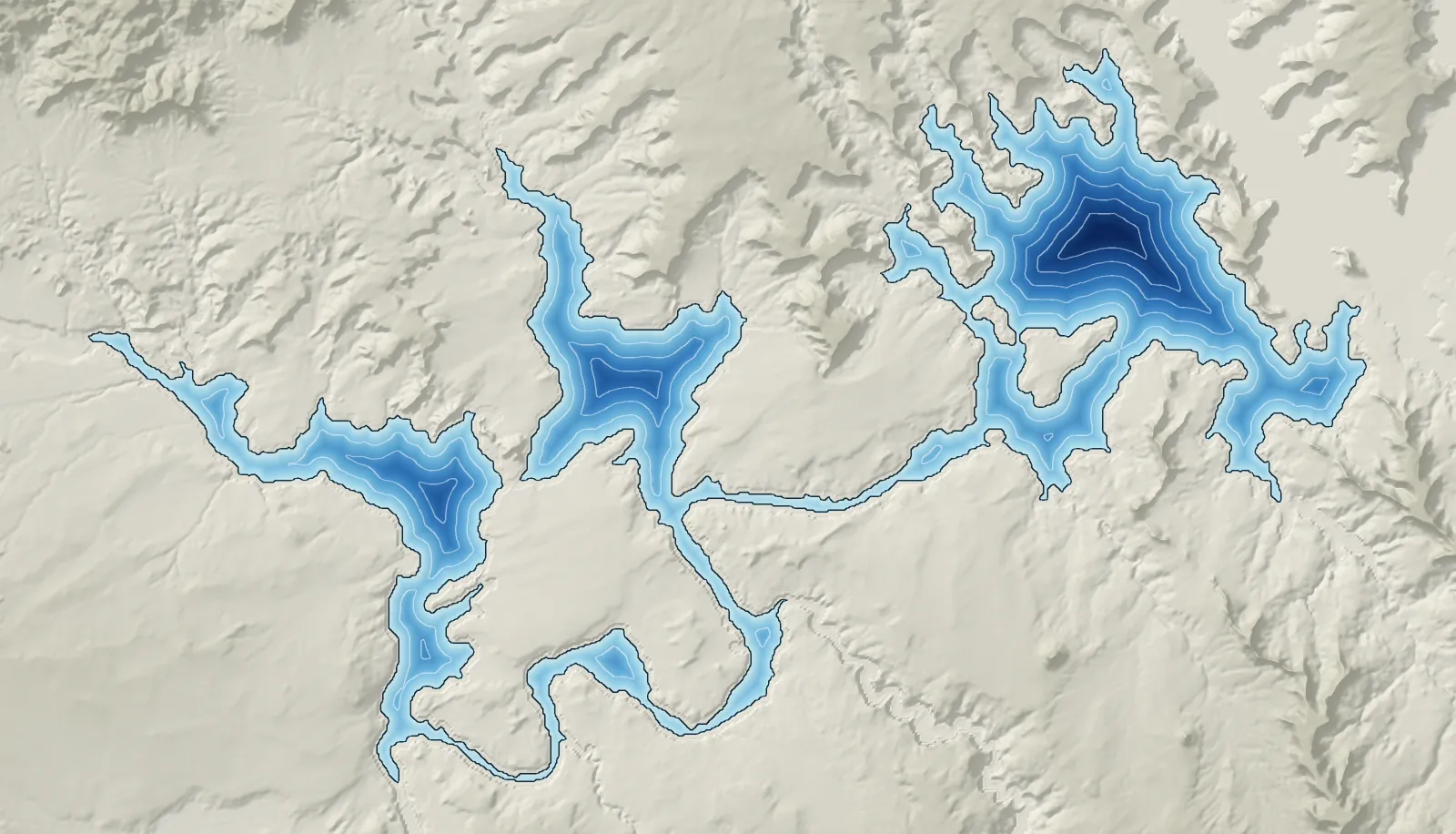
Our pick to start on Lake Powell is a point drop-off in 8 to 16 ft of water, marked on the map. The bottom falls away fast off this point; fish rest deep and move up the slope to feed. It is a good place for striped bass and smallmouth bass; try swimbait or live shad where bait is. The best window there is 6:15 am to 8:30 am. Down at that depth the water is about 54°F, against 55°F on top.
Where the season stands
The calendar matters as much as the thermometer. Late fall at this latitude is a season of short, strong feeding windows. Fish fatten up for winter, and they key on schools of baitfish that keep moving as the water cools. On Lake Powell at 58°F, striped bass and largemouth bass fit that pattern best.
Tactics for this week
- Set your depth for 58°F water: The surface is 58°F (a few days ago). Work the middle of the range early, then follow the fish shallower as the sun warms the water.
- Tie on the right bait: At this spot, try swimbait or live shad where bait is. Striped bass: watch for birds and surface feeding.
- Work the edge, not the middle: Cover water with a moving bait first, then slow down with a jig or plastic where you get a bite. Position the boat in deep water and cast up onto the shallow side, so your bait falls down the slope the way fish face.
- Use the wind, carefully: With light wind the water is flat and fish spook easily; make long casts and go lighter on line. A light chop is a good thing: it breaks up the light and makes fish bolder.
Know the water
Lake Powell spreads over about 161,000 acres and roughly 1,900 miles of shoreline at full pool. The deepest water sits around 580 ft. Anglers come to Lake Powell for striped bass, smallmouth bass and largemouth bass. Knowing which fish are comfortable at today's temperature narrows a big lake down to a few good spots.
The week ahead
For the calmest weather, Wednesday is the pick of the next few days: sunny, barely a breeze and a high near 62°F.
The bite ratings peak on Tuesday, Thursday and Friday: 5 of the next 7 days rate good or better. On Tuesday the strongest window runs 6:15 am to 8:30 am, and on Wednesday 6:30 am to 8:45 am.
Questions
How deep is Lake Powell?
Around 580 ft at its deepest. It covers about 161,000 acres with roughly 1,900 miles of shoreline at full pool.
How warm is Lake Powell right now?
About 58°F at the surface on the latest clear reading (a few days ago). Shallow coves can run a few degrees warmer on sunny afternoons.
Lake Powell every morning
Water temperature, level, wind and bite times on your phone.

Read the guide
- How to read a lake depth map: points, humps and channelsA plain guide to reading a lake depth map: contour spacing, points and drop-offs, humps, old river channels, and LakeScope's 3-D lake bed to find them fast.
- Lake Powell fishing and boating guideLake Powell's canyon arms hide striped bass, smallmouth and walleye around deep points and steep walls. Here's where to fish, launch and what to watch for.
Related reports
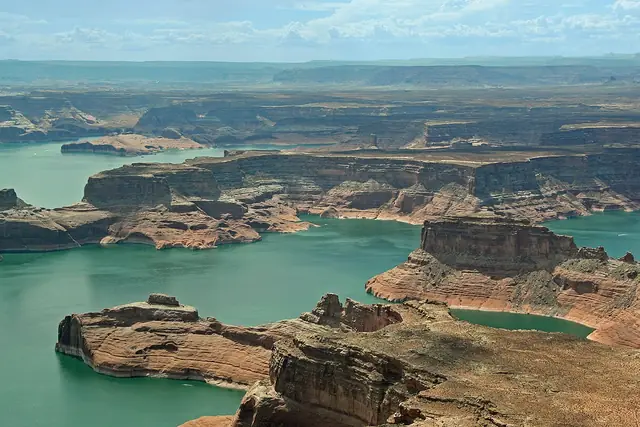 News brief Lake levels · Utah
Lake Powell up 20 ft in 30 days
Up 20 ft in a month, Lake Powell is flooding fresh cover.
Lake vs lake Fishing · Utah
Lake Powell vs Bear Lake: which Utah lake to fish this week
Two Utah lakes, 7°F apart at the surface. Water, level, wind and the bite side by side, and which one we would pick.
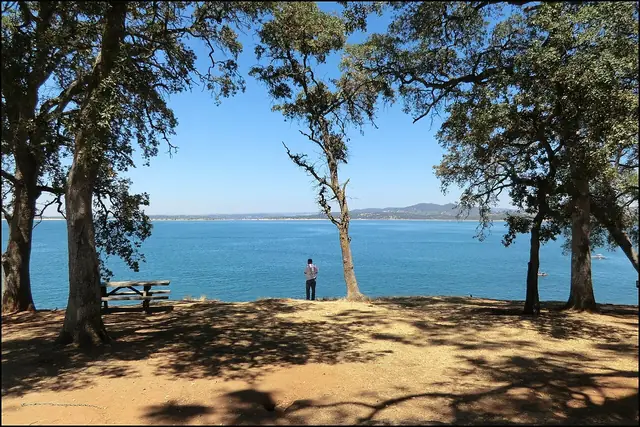 Deep dive Lake levels · California
Folsom Lake is 7 ft lower than a month ago: ramps and where the fish went
Lower water on Folsom Lake changes the launch, the spots and the hazards. The numbers, and how to adjust.
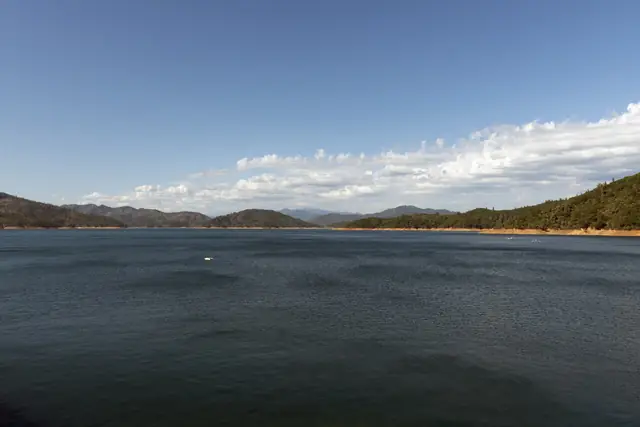 Deep dive Lake levels · California
Falling water on Shasta Lake: down 7 ft since last month
Lower water on Shasta Lake changes the launch, the spots and the hazards. The numbers, and how to adjust.