
Deep diveLake levels · California
Falling water on Shasta Lake: down 7 ft since last month
Lower water on Shasta Lake changes the launch, the spots and the hazards. The numbers, and how to adjust.
Shasta Lake reads 971.0 ft on the gauge. That is 7.3 ft lower than 30 days ago, with 0.8 ft of that in the past week. For this time of year that is 17 ft below normal.
A falling lake pulls fish off the banks they used last month, exposes hazards that were safely underwater, and can leave the shallow end of a ramp in the mud.
Where the level stands
The chart shows the last month of daily readings, with the dashed line marking the normal level for this time of year.
7 ft in a month moves the water's edge a long way on flat banks.
For reference, the range we have on record runs from 882.2 to 1,064.5 ft.
With about 30,000 acres and roughly 365 miles of shoreline at full pool, Shasta Lake is a lot of water to cover. It runs around 520 ft at its deepest. The main targets on Shasta Lake are trout, spotted bass and kokanee. On a lake with that much shoreline, a few feet of water changes the shape of every cove and point.
How falling water moves the fish
Falling water pulls fish off the shallow banks toward the first drop-off, the old creek channels and the ends of long points, places where a short move keeps them close to deep water.
Do the math before you anchor: a spot that was 20 ft deep a month ago is about 13 ft now. Humps, stumps and rock piles that were safe to run over are that much closer to the propeller.
What's biting
On Shasta Lake, trout are in a good mood. In the 60s trout move deeper as the top layer warms. Near the surface and along shorelines.
Expect spotted bass to be a strong bet. The 60s are a sweet spot: bass are active, roam widely and will chase moving baits. They chase baitfish into creeks and coves.
As for kokanee salmon, they are in their comfort zone. Kokanee go deeper as the day warms; follow them down.
Where we would fish first
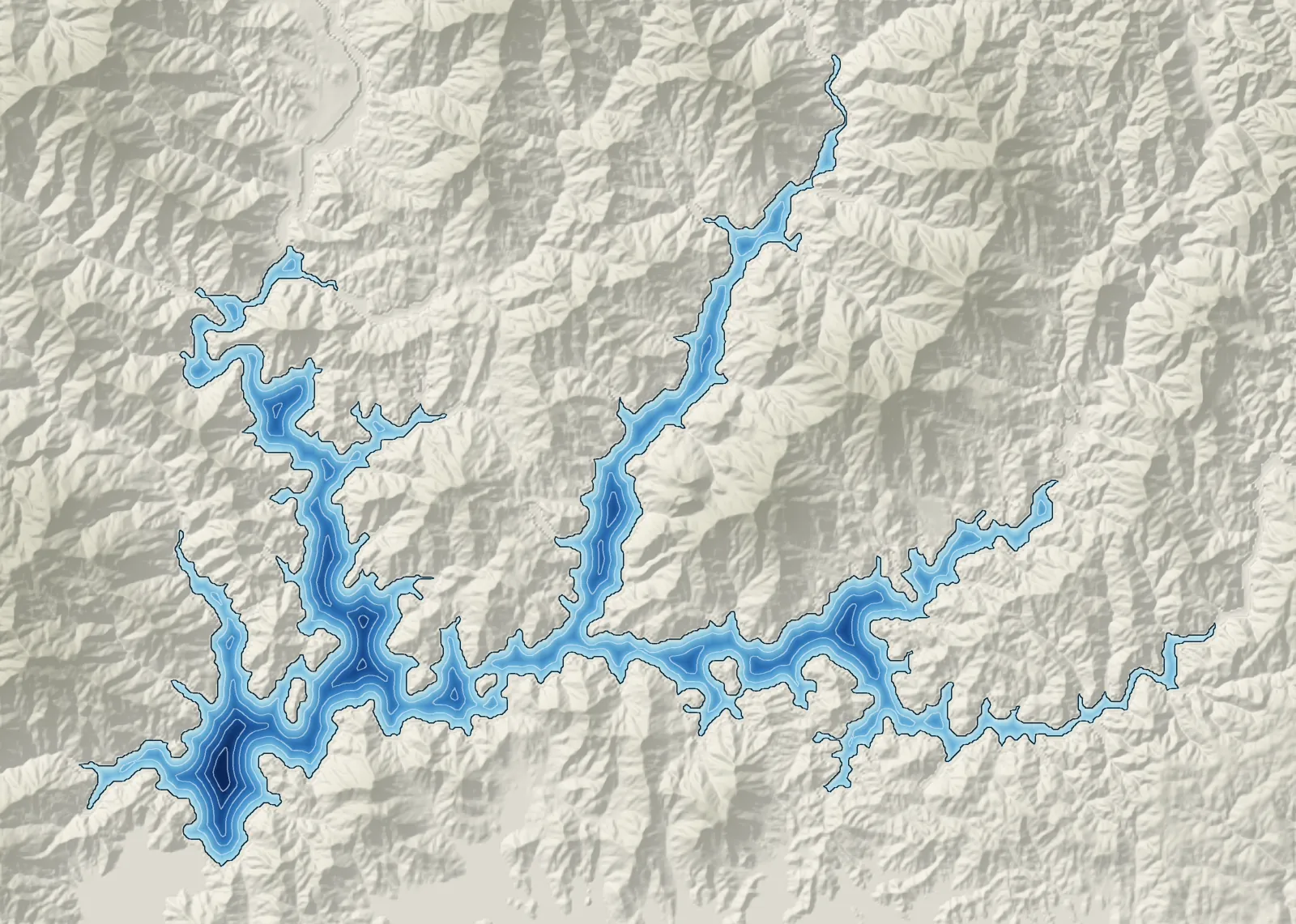
Our pick to start on Shasta Lake is a wind-blown bank in 4 to 16 ft of water, marked on the map. Today's south wind pushes bait into this bank across open water. It is a good place for smallmouth bass and trout; try tube or ned rig on rock. The best window there is 4:00 pm to 4:45 pm. Down at that depth the water is about 58°F, against 59°F on top.
Where the season stands
Where does November leave a lake like Shasta Lake? Late fall at this latitude is a season of short, strong feeding windows. Fish fatten up for winter, and they key on schools of baitfish that keep moving as the water cools. On Shasta Lake at 60°F, trout and spotted bass fit that pattern best.
Making it work on the water
- Set your depth for 60°F water: The surface is 60°F (a few days ago). Work the middle of the range early, then follow the fish shallower as the sun warms the water.
- Tie on the right bait: At this spot, try tube or ned rig on rock. Trout: near the surface and along shorelines.
- Work the edge, not the middle: Cover water with a moving bait first, then slow down with a jig or plastic where you get a bite. Position the boat in deep water and cast up onto the shallow side, so your bait falls down the slope the way fish face.
- Use the wind, carefully: Friday brings wind from the south with gusts near 21 mph: bait stacks up on the north side, and fish follow. Small boats should stay in sheltered water when gusts top 20 mph.
Know the water
With about 30,000 acres and roughly 365 miles of shoreline at full pool, Shasta Lake is a lot of water to cover. It runs around 520 ft at its deepest. Anglers come to Shasta Lake for trout, spotted bass and kokanee. Knowing which fish are comfortable at today's temperature narrows a big lake down to a few good spots.
Weather and bite outlook
For the calmest weather, Saturday is the pick of the next few days: light rain likely, wind around 5 mph and a high near 54°F. The wind builds to its strongest on Friday, out of the south at 21 mph.
The bite ratings peak on Saturday, Monday and Tuesday: 3 of the next 6 days rate good or better. On Friday the strongest window runs 4:00 pm to 4:45 pm, and on Saturday 3:30 pm to 5:30 pm. A good bite rating does not calm the water: on Friday, fish the sheltered side and skip long open crossings.
Questions
How deep is Shasta Lake?
Around 520 ft at its deepest. It covers about 30,000 acres with roughly 365 miles of shoreline at full pool.
How warm is Shasta Lake right now?
About 60°F at the surface on the latest clear reading (a few days ago). Shallow coves can run a few degrees warmer on sunny afternoons.
Shasta Lake every morning
Water temperature, level, wind and bite times on your phone.

Read the guide
Related reports
 Deep dive Lake levels · California
Folsom Lake is 7 ft lower than a month ago: ramps and where the fish went
Lower water on Folsom Lake changes the launch, the spots and the hazards. The numbers, and how to adjust.
 By the numbers Lake levels · California
6 numbers that explain Lake Oroville this week
The level, the trend and what they mean on the water: Lake Oroville in 6 numbers.
 News brief Lake levels · California
Lake Oroville down 12 ft in 30 days
Lower water on Lake Oroville changes the launch, the spots and the hazards.
 News brief Wind & weather · California
25 mph gusts on Lake Tahoe Friday
Friday brings gusts near 25 mph to Lake Tahoe out of the southwest.